
The Ultimate Guide to Taiwanese Street Food: 15 Must-Eat Dishes in 2026
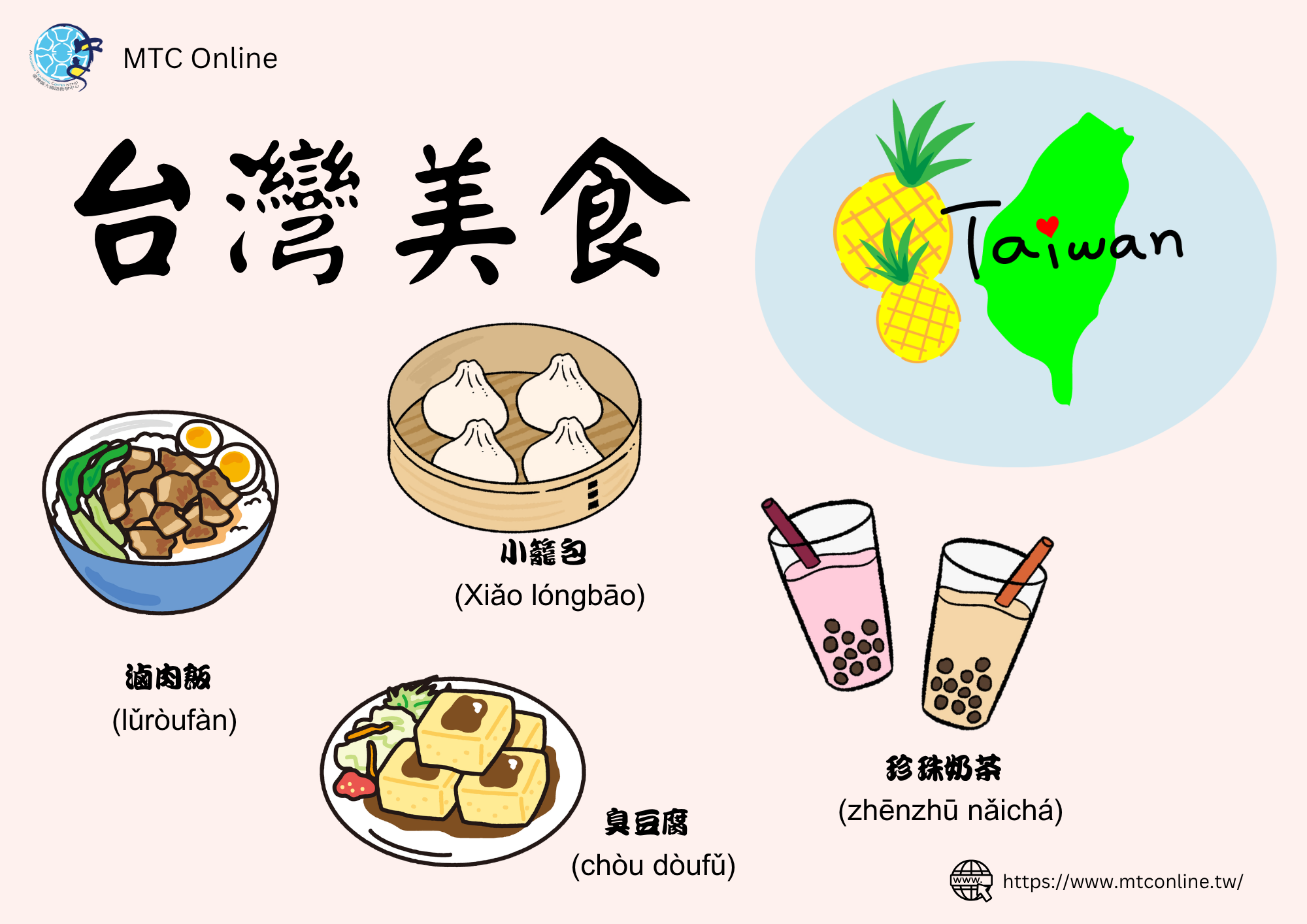
Are you planning a trip to the "Heart of Asia?" If so, there is one thing you cannot miss: The food. Taiwan is often called a "foodie paradise," and for a good reason. From the bustling alleys of Shilin Night Market to the hidden gems in Tainan, Taiwanese street food (小吃, xiǎochī) is the soul of the island’s culture.
In this comprehensive guide, we will explore the best street food in Taiwan, the history behind these flavors, and tips on how to navigate the famous night markets like a local.
Why is Taiwan Famous for Street Food?
The term Xiaochi literally translates to "small eats." Unlike a formal sit-down dinner, Taiwanese street food is about variety, speed, and affordability. Influenced by Fujianese, Hakka, and Japanese cuisines, Taiwan has developed a unique culinary identity that balances sweet, salty, and savory flavors perfectly.
1. The Icons: World-Famous Taiwanese Snacks
Pearl Milk Tea (Bubble Tea)
No list of Taiwanese food is complete without Bubble Tea (珍珠奶茶, zhēnzhū nǎichá). Invented in the 1980s, this iconic drink features chewy tapioca pearls (Bubbles) in a creamy milk tea base. Whether you like it hot or iced, it’s the ultimate Taiwanese refreshment.
Beef Noodle Soup
Considered the "national dish" of Taiwan, Beef Noodle Soup (牛肉麵, niúròumiàn) is a bowl of comfort. It features tender braised beef, chewy wheat noodles, and a rich broth made with soy sauce, ginger, and star anise. Every year, Taipei even hosts a festival dedicated solely to finding the best beef noodles in the city!
2. Night Market Essentials: Savory Delights
If you are visiting a night market (夜市, yèshì), here are the dishes that should be at the top of your list:
Braised Pork Rice (Lu Rou Fan)
Simple yet addictive, Braised Pork Rice (滷肉飯, lǔròufàn) is a staple. Finely chopped pork belly is slow-cooked in soy sauce and spices until it melts in your mouth, then served over steaming white rice. It’s cheap, filling, and incredibly satisfying.
Crispy Fried Chicken (Popcorn Chicken)
Taiwanese Fried Chicken (鹽酥雞, yánsūjī) is seasoned with salt, pepper, and fried basil leaves. Unlike Western fried chicken, the Taiwanese version uses a unique spice blend (often including five-spice powder) that gives it an irresistible aroma.
Stinky Tofu
You will likely smell it before you see it! Stinky Tofu (臭豆腐, chòudòufǔ) is fermented tofu that is usually deep-fried and served with pickled cabbage. While the smell is strong, the taste is savory and mild. It is a "rite of passage" for any traveler in Taiwan.
The Art of the Soup Dumpling: Xiao Long Bao (小籠包)
If there is one dish that defines the precision and elegance of Taiwanese culinary skill, it is the Xiao Long Bao (小籠包). Often called "Soup Dumplings" in English, these delicate treats are world-famous, thanks in large part to the global success of the Taiwanese restaurant chain, Din Tai Fung.
Mastering Mandarin: How to Describe Food and Compliment Your Chef in Taiwan
If you are living in Taiwan, you probably spend a lot of time trying new dishes! Whether it’s a steaming bowl of beef noodles or a tray of delicate Xiao Long Bao, knowing how to express your feelings about your meal is a vital skill. In this guide, we will look at two of the most important grammar structures for daily life: using "有一點" (yǒu yìdiǎn) to describe your food and the particle "得" (de) to compliment someone’s cooking.
1. When Things Aren't Quite Right: Using "有一點" (Yǒu yìdiǎn)
In Mandarin, when we want to say something is "a little bit too..." or "a bit" in a negative way, we use 有一點 (yǒu yìdiǎn) + State Verb.
The Flavor of Beef Noodles
Imagine you are sitting at a local shop. You take a sip of the broth, and the spice hits you.
- Chinese: 這碗牛肉麵有一點辣。
- Pinyin: Zhè wǎn niúròumiàn yǒu yìdiǎn là.
- English: This bowl of beef noodles is a bit too spicy.
Common Food Complaints
You can use this structure whenever a dish doesn't perfectly suit your taste:
- 有一點鹹 (yǒu yìdiǎn xián) — A bit too salty.
- 有一點燙 (yǒu yìdiǎn tàng) — A bit too hot (temperature).
- 有一點貴 (yǒu yìdiǎn guì) — A bit too expensive.
Pro Tip: Remember that "有一點" is usually used for negative feelings or things you'd like to change. If you like it, you’d simply say "很有名" (hěn yǒumíng, very famous) or "很好吃" (hěn hǎochī, very delicious)!
2. How to Give a Great Compliment: The Power of "得" (De)
When you are invited to a Taiwanese friend's home for dinner, you’ll want to be a polite guest. To tell someone they do an action well (like cooking), we use the Degree Complement: [Verb] + 得 + [Adverb/Adjective].
Complimenting the Cook
If the meal is incredible, you should say:
- Chinese: 你做飯做得真好吃!
- Pinyin: Nǐ zuòfàn zuò de zhēn hǎochī!
- English: You cook really well (literally: You cook so that it is very delicious)!
Why do we say "Zuò" twice?
In Mandarin, if a verb has an object (like "cooking food" — zuò fàn), you must repeat the verb before adding the "得".
- Correct: 你做飯做得很好。 (Nǐ zuòfàn zuò de hěn hǎo.)
- Incorrect: 你做飯得很好。
Other Ways to Use "得"
You can use this same structure to compliment your classmates or friends on other skills:
- 說得很流利 (shuō de hěn liúlì) — Speaks fluently.
- 寫得很漂亮 (xiě de hěn piàoliang) — Writes beautifully.
- 唱得很好聽 (chàng de hěn hǎotīng) — Sings professionally.
Summary: Eating Your Way to Better Mandarin
Next time you are at a night market or a friend’s dinner party, try out these phrases:
- "這碗麵有一點..." (This noodle is a bit...)
- "你做得真好!" (You did this really well!)
Mastering these small grammar points will make your life in Taiwan much smoother and help you connect more deeply with the local culture.
Are you ready to practice? Head over to your favorite beef noodle shop tonight and see if you can describe the broth!
Conclusion: Start Your Flavor Adventure
Taiwanese street food is more than just a meal; it is a way of life. Whether you are sipping on a bubble tea or braving the scent of stinky tofu, you are participating in a tradition that spans generations.
Are you ready to explore Taiwan? Whether you are here to study Mandarin or simply to travel, the flavors of the night market will be the highlight of your journey.
(Click here to join the Hybrid online course and learn more Chinese!)